
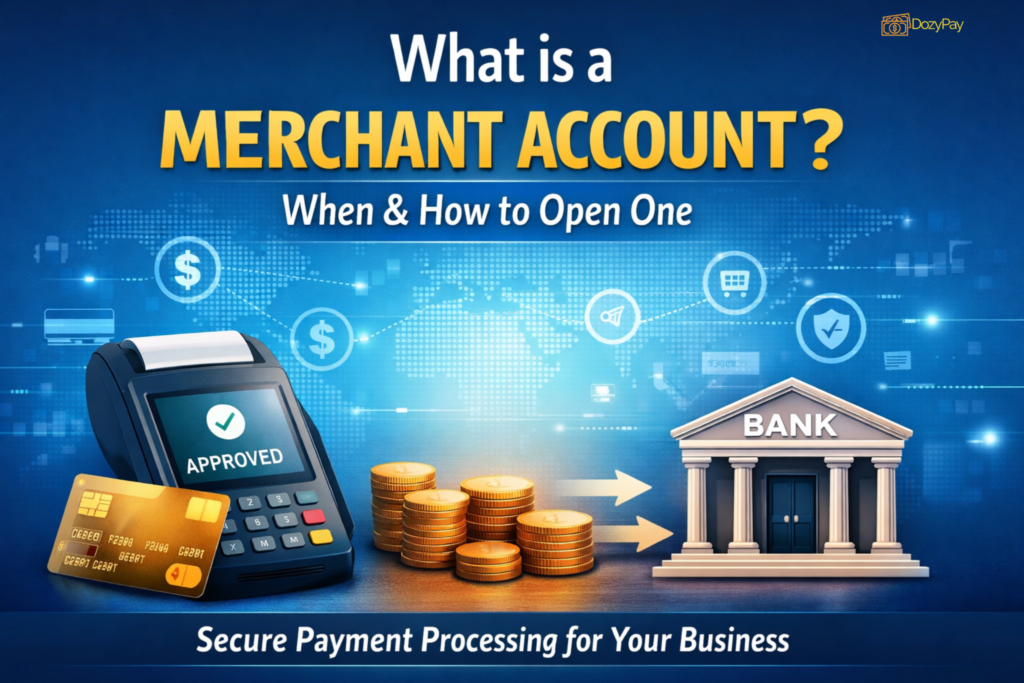
Online payments have become essential for every business. Customers want fast, smooth, and secure checkout experiences. Therefore, businesses need the right payment setup to accept card and digital payments. This is where a merchant account plays a key role.
If you run an online store, offer digital services, or manage recurring payments, understanding merchant accounts is important. In this guide, we explain what a merchant account is, when you need one, and how to open it.
What is a Merchant Account?
A merchant account is a special bank account that allows a business to accept electronic payments. These payments include credit cards, debit cards, UPI, and digital wallets. It acts as a bridge between your customer’s payment method and your business bank account.
When a customer makes a payment, the money does not go directly to your regular bank account. Instead, it first enters the merchant account. After verification and processing, the funds are transferred to your business account. This entire process happens quickly, often within 24 to 72 hours.
Merchant accounts also help manage refunds, chargebacks, and transaction security. Therefore, they are essential for any business that wants to accept online or card payments professionally.
How Does a Merchant Account Work?
The process is simple. First, a customer enters payment details on your website or payment page. Next, the payment gateway sends the request to the payment processor. Then, the issuing bank approves or declines the transaction.
If approved, the amount is held in your merchant account. After settlement, the money moves to your business bank account. This system protects both the customer and the business. It also reduces fraud risks and ensures secure transactions.
Because of this structured flow, merchant accounts are trusted by banks and payment networks worldwide.
When Do You Need a Merchant Account?
Not every business needs a merchant account. However, many modern businesses do. Here are common situations where a merchant account becomes necessary:
- When You Sell Online
If you operate an eCommerce website, a merchant account is mandatory. It allows customers to pay using cards and digital methods. Without it, online sales become impossible.
- When You Accept Card Payments
Retail stores, restaurants, and service providers that accept card payments need merchant accounts. It ensures quick and safe card transaction processing.
- When You Offer Subscription Services
Recurring billing for memberships, software services, or coaching platforms requires a merchant account. It handles automatic monthly or yearly payments.
- When You Run a High-Risk Business
Industries like travel, gaming, forex, or digital services often fall under high-risk categories. These businesses need specialized merchant accounts to process payments smoothly.
- When You Want Faster Settlements
A merchant account helps receive payments faster than traditional invoicing or bank transfers. This improves cash flow.
Types of Merchant Accounts
Different businesses require different merchant account setups.
Standard Merchant Account:
Suitable for low-risk businesses with stable transaction history.
High-Risk Merchant Account:
Designed for industries with higher chargeback or fraud risks.
Offshore Merchant Account:
Used by businesses serving international customers or operating globally.
Choosing the right type depends on your business model and target market.
Benefits of Having a Merchant Account
A merchant account offers many advantages:
- Accept multiple payment methods
- Improve customer trust and checkout experience
- Reduce payment delays
- Manage chargebacks efficiently
- Increase sales conversion rates
- Enable global transactions
Because of these benefits, merchant accounts have become a business necessity in today’s digital economy.
How to Open a Merchant Account
Opening a merchant account involves a few clear steps. The process is straightforward if your documents are ready.
Step 1: Choose a Payment Service Provider
Select a reliable payment partner that offers merchant account services. A good provider guides you through approval, integration, and compliance.
Step 2: Submit Business Documents
You usually need:
- Business registration certificate
- Bank account details
- PAN or tax documents
- Website URL
- Owner identity proof
High-risk businesses may need extra compliance documents.
Step 3: Website Review
Payment providers review your website to check product details, refund policy, contact information, and terms of service.
Step 4: Risk Assessment
Banks analyze your industry type, transaction volume, and chargeback risk. This decides approval and transaction limits.
Step 5: Account Approval
Once approved, you receive merchant account credentials. Then, the payment gateway gets integrated into your website.
Step 6: Start Accepting Payments
After integration, your business is ready to receive online payments securely.
Important Things to Consider Before Applying
Before opening a merchant account, keep these points in mind:
- Maintain a professional website
- Clearly display refund and cancellation policies
- Provide accurate business details
- Ensure product or service descriptions are transparent
- Monitor chargeback ratios regularly
These steps increase approval chances and prevent account suspension later.
Common Challenges and Solutions
Some businesses face merchant account rejections due to high-risk categories or incomplete documents. However, working with the right payment partner solves these issues.
Specialized payment service providers help high-risk merchants get approved faster. They also offer chargeback management tools and fraud protection systems.
This is where platforms like Dozypay assist businesses in obtaining reliable merchant account solutions with smooth onboarding and secure payment infrastructure. Using the right partner simplifies the entire setup process.
Why Merchant Accounts Matter for Business Growth?
A merchant account is not just a payment tool. It is a growth enabler. Customers trust businesses that offer easy and secure payment options. Smooth checkout experiences reduce cart abandonment. Faster settlements improve working capital. All these factors help scale operations faster.
With digital transactions increasing every year, businesses without merchant accounts risk losing customers. Therefore, investing in a proper payment setup is a smart business decision.
Companies like Dozypay make it easier for startups, SMEs, and high-risk merchants to enter the digital payment space without complex banking hurdles.
Final Thoughts
A merchant account is the foundation of modern payment processing. It allows businesses to accept card and digital payments securely. It also improves customer trust, cash flow, and business credibility.
If you sell online, offer subscriptions, or serve international customers, opening a merchant account is essential. With proper documentation and the right payment partner, the process becomes smooth and fast.
In today’s competitive market, businesses that simplify payments always stay ahead.
FAQ :
Q1. What is a merchant account used for?
A merchant account is used to accept online and card payments. It temporarily holds customer funds before transferring them to the business bank account after transaction approval.
Q2. Is a merchant account necessary for an online business?
Yes. If you run an eCommerce store or accept online payments, a merchant account is essential to process debit cards, credit cards, and digital wallet transactions securely.
Q3. How long does it take to open a merchant account?
The approval process usually takes 2 to 7 working days. High-risk businesses may require additional verification and compliance checks, which can take slightly longer.
Q4. What documents are required to open a merchant account?
Common documents include business registration proof, bank account details, tax documents, website URL, identity proof of the business owner, and product or service details.
Q5. Can high-risk businesses get a merchant account?
Yes. High-risk businesses such as travel, gaming, forex, and digital services can get specialized high-risk merchant accounts through payment service providers.
Q6. What is the difference between a payment gateway and a merchant account?
A payment gateway processes the transaction request, while a merchant account holds the transaction funds before settlement into the business bank account. Both work together to complete online payments.
Q7. How can I increase merchant account approval chances?
Maintain a professional website, display clear refund policies, provide accurate business details, and submit complete documentation. These steps improve approval success.